Showing posts with label Ross Bentley. Show all posts

November 14, 2016

How Max Verstappen exposed Formula One groupthink.

No comments:


"Max Verstappen is redefining physics"


Startling statement from Toto Wolff, a man now at the pinnacle of Motorsport and one who has some understanding of physics himself.

But what Max should really get credit for is exposing Formula One groupthink.

Because what Verstappen did was something many of you with even basic track experience will understand,  he drove classic rain lines!

Driving off line and avoiding apes?  That's Skip Barber racing in the rain 101.


We got driver coach Peter Krause  on the horn:  
"Max was doing everything Bruce MacInnes and other Skippy instructors have taught for four decades!"

So, the bigger question: are we to believe the top drivers in the world (and if you doubt they are, you didn't watch the race in Interlagos)  forgot how to drive in the rain?

Not exactly, but Verstappen exposed the rut many of them may be stuck in.

For years, high downforce and very good rain tires allowed drivers to largely ignore rain lines, relying on car setup to drive the essentially the same places on the track they would in the dry.   In Brazil,  a combination of factors dropped grip  below a certain critical threshold  yet most drivers appeared to not adjust their approach.

We also asked coaching guru Ross Bentley to weigh in:

"Verstappen's performance in Brazil illustrates a few things.  First, with youth often comes a good form of not knowing what you shouldn't do. In other words, he's naive, but in a positive way. Too many drivers, after just a few years, start to follow what they think they should do. And they believe what they think they should believe. Verstappen doesn't believe he has any limits, and that's why he's doing what he's doing in F1. Let's hope he continues this way, because it's what Senna and Schumacher did longer than most."
When I hear people like Toto Wolff saying things like Verstappen is "redefining physics," it also shows how even people at the top of the sport can get into this "follow others" mindset. Verstappen isn't redefining physics. He simply drove further off line than other drivers because he wasn't set in his ways, and there is more grip that far off line. On one hand, what Verstappen did was nothing special - go to any junior formula race and you'll see a lot of that. On the other hand, what he did was special because he didn't follow everyone else, or the way others think.!

Peter Krause again:

This is the problem with the "funnel" approach. The higher they get, the narrower their view on what works. VES might be a tad immature, but he goes where there is grip, and he has ultimate confidence that IF he gets into trouble, he has the skillz to get out of it. Witness the epic save!

Yes "THAT" save, Let's have a quick parenthesis there.   I think even the most rabid Max fanboy will admit there was an element of luck involved but that said,  Max did everything he could, phenomenally right.     Pay attention how, once the car is sliding well over a 45 degrees to the direction of travel he locks the tires and straightens the wheel.  This gives him the best possible opportunity to prevent a tank slapper once the car straightens out in one direction or the other.    The true magic moment is the precision and timing of when Verstappen releases the brakes, taming momentum and catching the car.  


A lot of drivers made a lot of saves this year at Interlagos. They will not get the glory the Dutchman will get and,  in part,  that's because it's show business.

Ross Bentley:

When TV commentators and journalists rage about a driver's performance, and wonder how he's doing it, remember that they're being paid to entertain. Former drivers who are making comments know what's going on, but it's more entertaining to marvel at the situation. Or maybe they've just forgotten what it was like to be young and naive!


Young and naive FTW then,  it's all about an open mind.  A good lesson for all, no matter where you race or how old you are!


July 22, 2015

Endurance Racing: From Lemons to Le Mans

No comments:


You know driver coach.Ross Bentley from his Speed Secrets series of books, perhaps you subscribe to his great Speed Secrets Weekly newsletter or shared his Instructor Manifesto.   

Maybe you've read the many How to Drive Faster  articles he has written for Axis,  Ross always has thought provoking tips on practicing the sport we love, better.

Ross' latest is about the ever more popular endurance format.   "Endurance Racing: from Lemons to Le Mans" is a downloadable e-book available free of charge. 

Below is the introduction.  to download the complete book, follow this link


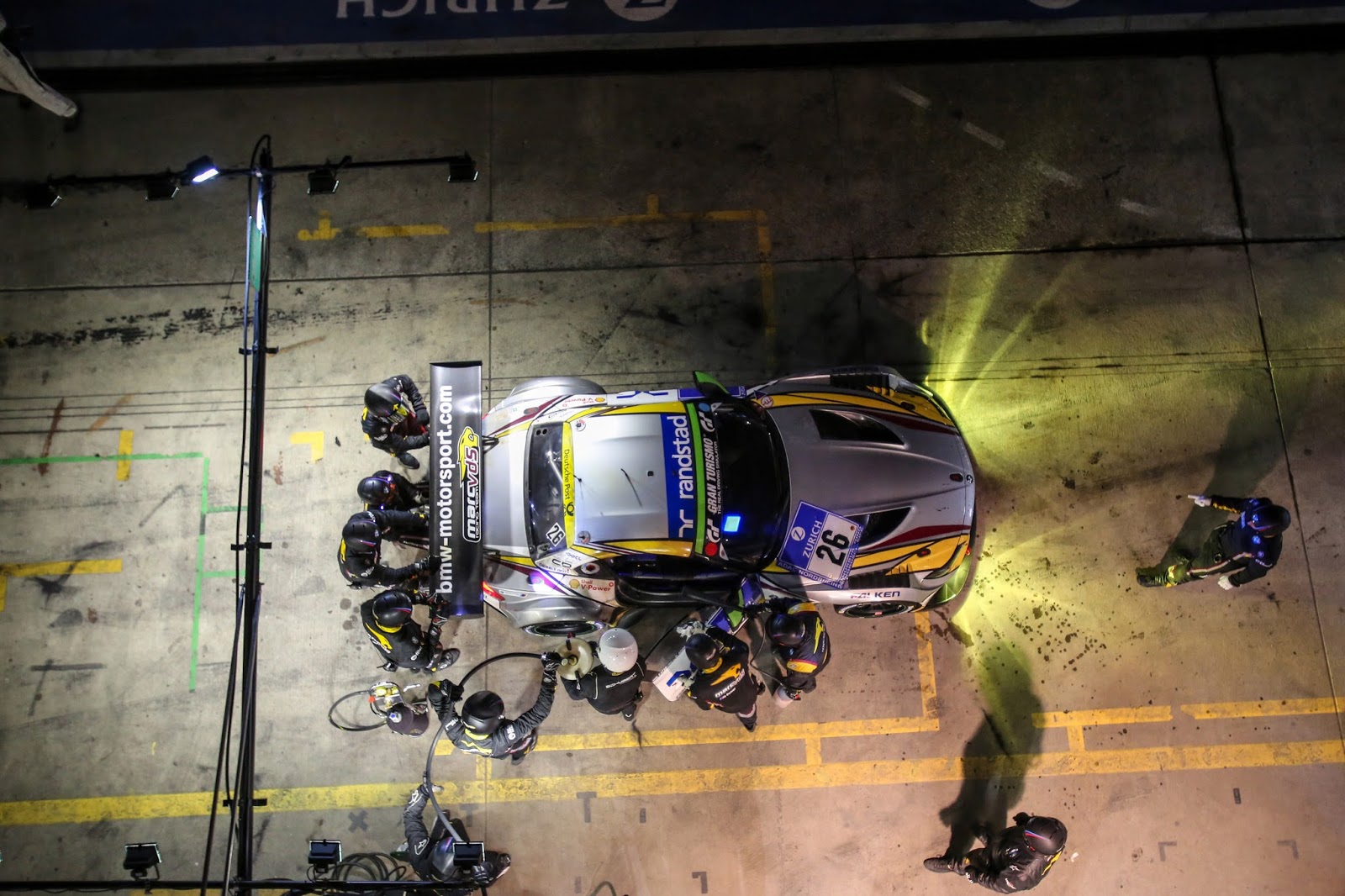
There’s something magical about endurance racing... driving long stints and the rhythm you get into, passing and being passed, night driving, adapting to changing conditions, dealing with problems, strategy and teamwork, and finding the perfect compromise of seating and handling setups between drivers.

Watch Steve McQueen’s classic movie, Le Mans, or Audi’s documentary, Truth in 24, and you can’t help but get caught up in the romanticism of the marathon struggles at the legendary French race. But what about the Rolex 24 at Daytona, Sebring 12-Hour, or Petite Le Mans? Chumpcar World Series and LeMons? Thunderhill 25-Hour? Club enduros? All classics from the day they were born because of what they are, and the tremendous effort individuals and teams put into them.

Endurance racing is challenging, fun, physically and mentally demanding, and... well, sometimes frustrating!

Why frustrating? Because endurance racing can be painful. But like running a marathon, every little bit of pain is worth it. Of course, that’s what you often say about a month after an endurance race.

Sometimes, you finish an endurance race, and immediately promise yourself (and anyone else who will listen) that you’ll never do it again because it was painful, challenging, tiring, and frustrating! And it’s because the reward doesn’t always seem to equal the demands. Often, the second an endurance race has been run, you can hear dozens of people swearing they’ll never do it again.

So, why does that decision change so often? Why do we go back to doing another endurance race, and then another, and then another? Mostly because our memories are flawed. It seems that about three weeks after you swear on a stack of bibles that you’ll never do another enduro again, you think to yourself, “Well, I probably will never do another one again. Okay, it could happen, but it’s unlikely.”
Then, a couple of weeks later, when the pain and difficulty of your previous endurance race has faded from your memory, you publicly announce that you’re going to do that race again – and win it! It’s drawn you back into its web.
And that’s how so many drivers and teams feel about endurance races. They’re addictive. They’re the ultimate motorsport challenge. It’s a love/hate relationship.

Endurance races can be just about any length, from a couple of hours to twenty- four and beyond. One way to define an endurance race is the requirement of more than one driver. I’ve written this guide with that definition in mind.

This eBook started life as a simple bullet-pointed document full of thoughts, tips, and ideas about endurance racing for a team that I was coaching at the Daytona 24-Hour race. Since then, I’ve
expanded it. While endurance races are long, my goal for this eBook is to make it short and to the point, kind of a sprint race format of information for endurance racers - just enough information to make you think, and to give you the key guidelines to improve your chances of being successful.
Along with my tips and advice, I’ve added some personal stories, so you can learn from my experiences.

I realize that not everyone reading this will drive at Daytona or Le Mans. Many will be competing in club events or one of the “low-cost endurance” races (LeMons, Chumpcar, American Endurance Racing, World Racing League, etc.). I’ve competed in almost all levels and types of endurance races, and I’ve noticed that the approach, the preparation, and how you actually drive in them is very similar. I think you’ll find most of what I’ve written will apply to whatever form of endurance race you’re competing in.


Photos: BMW AG, Porsche, Audi, Bentley, Nissan and Aston Martin Press.

September 21, 2013

Speed Secret Saturday: Debriefing.

1 comment:
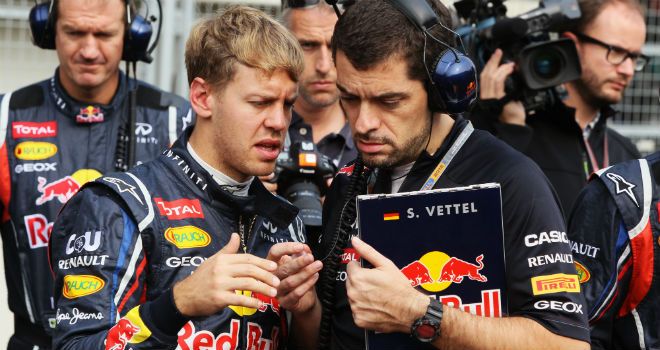
Sebastian Vettel and "Rocky" Rocquelin


Communicating with your race engineers (even if that engineer is yourself) is crucial and this week Ross Bentley has a handy, prioritized list of for you to follow.


Handling Debrief Process


Alonso and Andrea Stella
Whether you have a team of engineers working on your car, or you discuss your car's handling problems while looking in a mirror each and every time you come off the track, you should consider what setup changes you could make to your car.

Of course, your answer may be, "Nothing," since you may have decided (smartly) that you're not going to make changes to your car until you know for sure that you've gotten most everything out of your own driving.
Still, I think a good habit to get into at the end of each on-track session is to ask yourself, "If I could make the car do one thing better, what would it be?"
Kimi debriefing
In doing so, you may uncover a driving issue or technique you want to improve before making changes to your car, but you might also discover a critical handling issue.

Having asked yourself that one all-important question, I then recommend the following process for debriefing on your car's handling (again, you can use this to debrief with yourself if you're your own "engineer").

Ask yourself these questions, in this order:

  1. What is the car doing? Understeer, oversteer or neutral?
  2. Where is the car doing it? Which turn(s)?
  3. Where in the turn(s)? Entry, mid or exit?
  4. What am I doing when the car does this?
  5. Braking? 
  6. Trail braking? 
  7. Releasing brakes? 
  8. Coasting? 
  9. Maintenance throttle? 
  10. On power? 
  11. Slowly turning steering wheel? 
  12. Crisply turning steering wheel? 
  13. Steady steering? 
  14. Unwinding the steering wheel?
  15. Is it the car or me? Am I inducing the handling problem, or is it the car?

If you follow the process of asking these questions, in this order, I'll guarantee you'll learn something that'll make you and your car faster. If you answer these questions honestly, digging deep for the answers, what to do setup-wise (or with your driving technique) will become obvious.

Ross Bentley
For more of Ross' writing, along with articles by other famous and not-so-famous contributors, go to www.speedsecretsweekly.com. He can be reached at ross@speedsecretsweekly.com.

July 20, 2013

Speed Secrets Saturday: Braking

3 comments:
Photo: Brando Cairone


Part II of Speed Secrets Saturday, driving coach guru Ross Bentley insights for you on Axis!
This week, getting rid of bad braking habits resulting from driving like... well, like a normal person (New Yorkers may have a built in advantage here).

Like it and want more?  Sign up for Speed Secrets Weekly and have coaching tips from some of the best coaches delivered straight to your inbox!


Stop Driving On The Street by Ross Bentley


Where do you spend the bulk of your time driving? On the street or on the track? Unfortunately, it’s on the street, right? And that's the problem with many track drivers' braking - the habits they’ve built while driving on the street.

Photo: James Boone
When you brake to a stop at a traffic light, how do you apply the pressure? You probably squeeze the brakes, gently increasing the pedal pressure the closer you get to where you want to stop, before finally easing off just as your car stops moving. 
So your brake pedal pressure starts relatively gently and then increases to its maximum near the end of the "brake zone." 

That's the opposite of how you should brake on the track.

Photo: Marcel Tauch
On the track, you want your initial braking application to be relatively hard, getting to maximum pedal pressure as quickly as possible. Then you want to maintain that pressure until you begin to release the pedal as you reach the turn-in point. So the pedal pressure goes from immediate maximum pressure to gently trailing off the pedal as you get to the end of the brake zone. 

Yep, the opposite of how you brake on the street.

Photo: Dennis Noten
You’ve probably been given the advice to squeeze the brake pedal on, to be smooth. Hey, I wrote that in my Speed Secrets books! But in some ways I regret it. 
Why? Because many drivers have taken this too literally – they’re too smooth with the initial application of the brakes. What I meant was to squeeze the brake pedal, but to do it really, really fast, ramping up to full pressure as immediately as possible. 
Applying hard initial pressure to the brake pedal can be done smoothly. But it might be a little more abrupt than you’re used to because of the way you drive on the street.

When I get to take someone for a ride around a race track – even an experienced track day driver or club racer – the comments afterward are predictable. “You’re very smooth! Well, except for when you first hit the brakes. I was surprised at how hard you braked – and how late.”

So if you want to be faster on the track, change the way you drive on the street to develop the habit of braking the right way. Sure, that might be a little harsh on your passengers, but you'll be giving them something to cheer about when they come watch you race. :)

For more of Ross' writing, along with articles by other famous and not-so-famous contributors, go to www.speedsecretsweekly.com. He can be reached at ross@speedsecretsweekly.com.


July 13, 2013

Speed Secrets Saturday: Rain.

3 comments:

One of the great pleasures of publishing Axis of Oversteer has been the chance to meet some of you readers, even if just virtually.  I'm always amazed to  to find out who stops by here  and  I take it as a personal badge of honor to count Ross Bentley among them.

Ross needs no introduction to many of you who have read his Speed Secrets series of books, required reading for anyone who loves doing what we do with cars.   To supplement the book series Bentley has recently started a subscription newsletter, SPEED SECRETS WEEKLY,  which will deliver articles penned by him and his extensive gang of some of the top driver coaches around, directly to your inbox.  Sweet, please check it out.

To give you a taste of the kind of valuable content you can access there, Bentley has agreed to write a series of articles for a new Axis series: Speed Secrets Saturday.  

The first piece is about driving in the rain and along with Ross, my thanks go to another great Axis friend, Jamey Price who has gone through his archive and choose these fantastic wet racing shots.
For another take on driving in the rain, have a look at "How I stopped worrying and learned to drive in the rain"


Racing In The Rain: Lessons from Enzo by Ross Bentley

Racing in the rain. Drivers either love it or hate it. There are very few drivers that have a “take it or leave it” attitude towards splashing around a race track. And drivers that hate the rain think that drivers that love it are either weird or stupid – or both.

I love racing in the rain.

That means that, depending on how you feel about wet race tracks, I now know what you think of me. But that’s okay, as long as you don’t get in my way as I slip and slide my way around. Don’t get in the way of my fun, please.

To borrow a line or two from my friend, Garth Stein, author of the best-selling novel The Art of Racing in the Rain, “I know this much about racing in the rain. I know it is about balance. It is about anticipation and patience... [it is also] about the mind! It is about owning one's body... It is about believing that you are not you; you are everything. And everything is you.”

Hmmm… What does Garth know that will make you faster in the rain? Actually, if you’ve read The Art of Racing in the Rain, you know that it’s Enzo, the dog, who says this. And after many years of studying racing, he knows best. In fact, if he had had opposable thumbs, he’d have proven his point by getting behind the wheel himself. Bark, bark.

Having spent some time coaching Enzo… err, Garth, let me share with you a few of my favorite Speed Secrets for racing in the rain – or just quickly navigating your way around a wet circuit in any kind of driving event.

1. Initiate slowly, react quickly.
All of your inputs must be made as slowly, gently and smoothly as you possibly can make them. That includes your steering, throttle and braking movements. Did you notice I didn’t just refer to the brake application? That’s because it’s not just how you apply the brakes, but perhaps even more importantly, how you release them. Same with your steering – your steering output (meaning, how you unwind the steering) is just as important.

So, your goal is to make every deliberate movement of the controls as slowly as possible, as that will make you smoother, increasing overall traction.

But, when it’s time to react to the car sliding, do it quickly. Don’t let the car get too far out of line, otherwise you’ll get “behind in your steering” (as one NASCAR driver said years ago about why he spun out).

2. Make the car do something.
When I played tennis seriously, years ago, I played at my best when I attacked. If I was hesitant, I lost. When I skied moguls, I had to attack them, otherwise I’d get behind and be reactionary rather than being proactive. If I’m hiking down a steep, rocky trail I’ve found it’s best to attack there, as well. If I’m holding back, waiting to avoid slipping, I’m more likely to slip.

When I approach a turn in the rain, I find it best to enter just slightly faster than I think the car can handle, making it slide from the moment I enter the turn. If I don’t – if I enter at a “comfortable speed” – I then spend the rest of the turn waiting, waiting, waiting for the car to start sliding. If it’s doesn’t slide, well, I know that I’m slow; if it slides, it takes me somewhat by surprise. But if I purposely make the car slide from the very second I enter the turn, I know exactly what I have. I know the grip level, and I’m more than ready to deal with the slide.

3. If the car feels like it’s on rails, drive faster.
As I said, if the car is not sliding at all, then I know I’m slow. If I’m not sliding, I know I can increase my speed.

4. Relax your grip and breathe.
The next time you’re driving down the highway, grip the steering wheel as tightly as you can. Then notice how much vibration you sense coming back through the wheel. Next, relax your grip, holding the steering with a light grip, and notice how much more vibration you feel. The lighter your grip on the wheel, the more feedback you get from the car. If you’re having a difficult time sensing the limits of the car in the rain, I suspect you have too tight a grip on the steering wheel.

Relax. Breathe.

When you hold your breath, you tend to tense your arms, hands, and the rest of your body, and therefore reduce your ability to sense the limits of the tires. When you tense your hands and arms, you tend to hold your breath, or at a minimum, restrict it. Which comes first? Holding your breath, leading to tense hands and arms, restricting your ability to sense the limits of the car? Or tensing your hands and arms, leading to restricting breathing? It doesn’t matter. What matters is relaxing your hands and arms, and breathing (or the other way around).

But an even worse thing happens when you hold or restrict your breath: Your brain interprets it as fear and anxiety, and when that happens you kick into fight or flight mode, causing your brains to operate at less than its peak. By “less than its peak,” I mean that it processes information slower, and your vision tends to drop – you don’t look as far ahead. I don’t need to tell you that neither of these are good.

Deliberately practice breathing when driving in the rain. The more you do that, the more automatic it will be, and the more relaxed you’ll be. If you’ve ever seen in-car video of Hans Stuck driving in the rain, you’ll see that he’s playing like a little kid jumping up and down in a mud puddle. Often, he would yodel. Perhaps that was how he ensured he wasn’t holding his breath.


Racing in the rain can be the most fun you’ll ever experience in a car, especially if you keep these four tips in mind. And more important than keeping them in mind, if you deliberately practice them you’ll find yourself “car dancing” in the rain before you know it. If you don’t believe me, just ask Enzo.


Ross Bentley

For more of Ross' writing, along with articles by other famous and not-so-famous contributors, go to www.speedsecretsweekly.com. He can be reached at ross@speedsecretsweekly.com.


nRelate Posts Only