How hot are classic cars? Surely, you read about the $2.4 million Porsche 993 GT2 . The classic car market shows no signs of slowing, despite bubble busting predictions of doom it is now estimated to be a $5.3 billion business worldwide and growing.
This seemingly insatiable thirst for classics is best expressed every September over on Lord March's back yard, where literally billions of dollars worth of technically obsolete but endlessly fascinating machines are flogged within an inch of their life... and sometimes beyond.
All these wonderful lunatics have to be catered to and classic car preparation has become a huge business. The leading player in the field is J.D. Classics, based in Maldon ( Essex), twenty five years in the business offering everything from full restoration to custom builds to race prep and support. In 2015 it reported sales for over $130M with ebitda of $24.5M for a profit of $18M.
Numbers that attract the interest of Private Equity and this past week it was announced that controlling interest in J.D. Classics was acquired by Charme Capital Partners. Charme is an Italian based fund led by Matteo di Montezemolo.
Sound familiar? Yes, he's Luca di Montezemolo's son.
Investing along with Charme is a NY based, art and collectibles fund deCar Partners and FiveW Capital. J.D.'s founder Derek Hood will maintain a significant minority share and the company will have funds needed for expansion and to acquire the inventory of cars needed to keep the whole thing going.
Of course, there is a finite supply of special cars so perhaps that's where the Revival comes in: if they bend them, or blow them up, companies like J.D. Classics will be there with the knowledge and expertise to rebuild anything.
We interrupt your summer break to remind you it's not always about more grip and downforce...
Take a couple of over fifty year old cars, one with a live axle rear suspension, narrow crap tires (by modern standards), great drivers on a wide open track like the Nürburgring Grand Prix circuit and a certain kind of magic begins to happen.
OK, you can't live in the past and you can certainly make a good argument that everything you see Nicky Pastorelli do to control this 1964 Ferrari GTO happens in a modern car, just so much faster that it's difficult to see and appreciate...
but...but...
Well, let's just leave it at: be thankful there are people who maintain and race these wonderful relics in series like Masters Historic Racing Turn it up.
Sort of a Gallic Goodwoodwood Revival, complete with no t-shirt, no sandals dress policy, Michael Delaney and Erich Stahler looks encouraged, the Le Mans Classic is a once every two year extravaganza of amazing sports cars from the 1920s through to Group C.
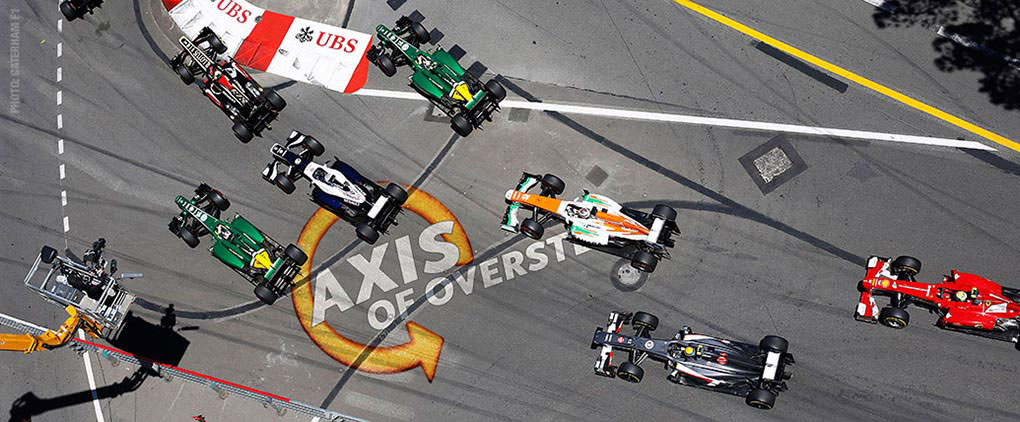
These days anyone can pick up a $400 camera and produce stunning VR videos so, it's easy to be blasé about it a simple overhead view of a Formula One at Monaco, even if that car had two extra wheel
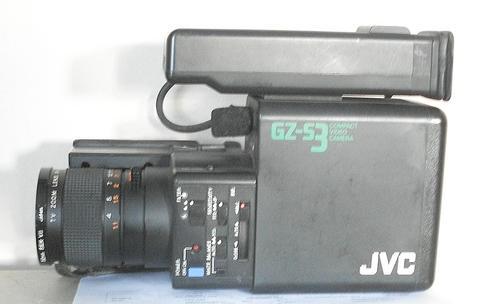
You probably have seen the clip of Patrick Depailler driving a naked Tyrrel P34 in Monaco, what you might not have ever seen is the rig it took to to film it. Back then a "small camera" was a 16mm weighing 20 pounds...
Plata o sin-plomo? Nobody ever protested his cars.
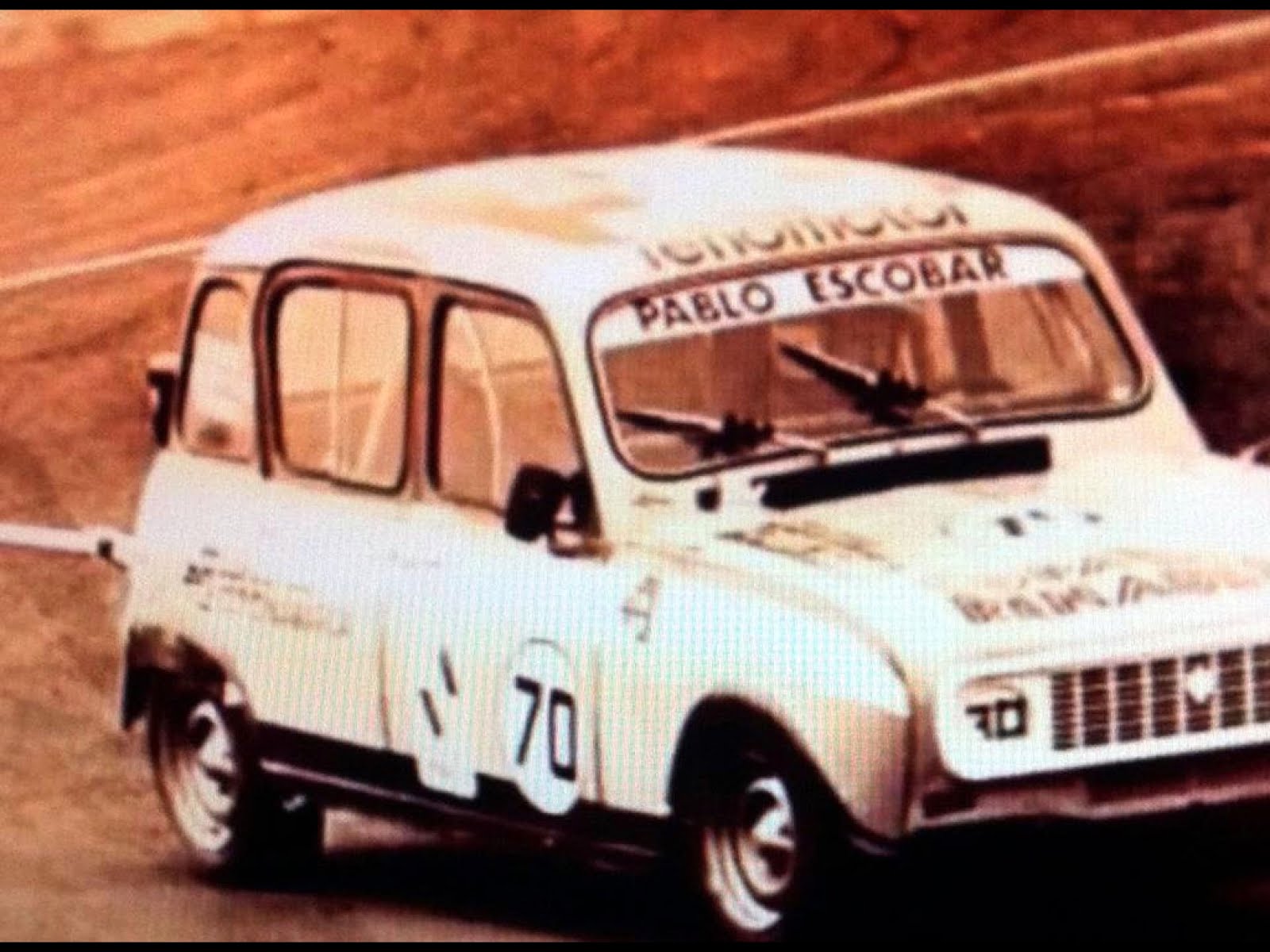
Would you believe some of the first mentions of Pablo Escobar in the Colombian press were not for of his activities as narco-trafficer or "politician" but as a competitor in the popular Copa Renault 4 in the late 1970s?
Renault 4 were, for Colombia, the equivalent of the VW Beetle for Germany or the FIAT 500 for Italy in the post war years: the car that got a country motorized and moving. Cheap, sturdy and practical, the "Renaulito" was a national symbol and is still a cult car to this day.
Escobar, like many Colombian young men, loved the boxy French cars. In fact, t's said the future kingpin was at the wheel of a green Renault 4 the day he was first arrested by police in 1974. He loved the cars so much, his sister Alba Marina told an interviewer how "El Patron" would often gift friends expensive new cars in exchange for their R4.
Escobar turned up at the race with four cars, one each for himself and his cousin Gustavo Gaviria and two spares. Racing that day were also his narco "frenemies" the Ochoa brothers, together they were the leaders of the Medellín Cartel that would later bring the Colombian nation to its knees with unspeakable violence.
But in 1979, if anyone knew what his day job was, it was not mentioned in the press. Escobar passed himself off as a successful businessman who started off dealing in "used" bicycles and later expanded to to cars and properties and now used his wealth to help the poor. This was true, he bought good will with generous donations to the poorest Colombians and it was also true he started his criminal career dealing in stolen bikes.
The passion for bikes ran in the family, Escobar's brother Roberto was a well known cyclist who later started the bike company Ositto (after his nickname "little bear"), sponsor of Escobar's and his posse's race cars.
Julian Calle, a competitor in the same series recalls how Escobar's team would show up to races with two support trucks "he was the only one with that kind of operation, he would arrive in a helicopter. But after the race he would offer everyone lavish meals with champagne and unbelievable women. I wonder if anyone really believed he did not sell sell drugs"
By all accounts, Don Pablo was an enthusiastic but mediocre driver. It probably did not help that he used to light up before every race "to focus his concentration". What did help was that in a nominally "spec" series, his cars were always more "spec" than others. He was slow in the turns but uncatchable in the straights. Not surprisingly, there are no records of his cars being found illegal.
In 1979, after six races Escobar was second in the championship "I can't deny it, life smiles at me, I'm a lucky man" he told a journalist.
Of course Escobar was not above using some of his "professional" methods in competition: one time he used his connections with the local police to make sure his main rival in the series from getting to the track for what was the first nationally televised race. "Police kept us on the side of the road for hours checking papers" said his rival Alvaro Mejia " we got there minutes before the start".
While the R4 were close to his heart Escobar would also field more powerful machines, particularly a 560HP Porsche 935 for a hillclimb in Medellin. He had a bet with Ricardo "Cuchilla" Londoño, then Colombia's most famous driver, that he could finish within 15 seconds of his time.
Cuchilla was the first Colombian to drive in Formula One, almost. He drove for Ensign in practice for the 1981 Brazilian GP but Bernie Ecclestone made it so that he would be denied a Superlicence once he caught wind of where his sponsorship came from.
That day, in the Martini liveried 935 which must have looked like a spaceship to the people of Medellin, Escobar finished eight seconds behind his rival. A huge margin in racing but to him, he had "won the bet fair and square" something he was immensely proud of.
Happy, carefree days before the horror he wrought on his country in the next decade. Escobar met his end in 1993 at the hand of the police. Londoño was gunned down in 2009.
If you prefer cars that go VROOM rather than fzzzzz.
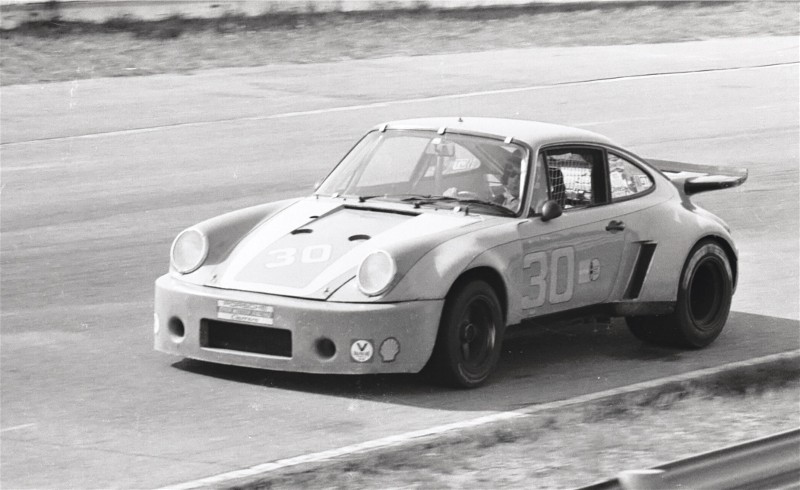
Let's ride with racing legend Bobby Rahal onboard a 1974 Porsche RSR for the final two laps of the Group B race at this years Classic 24 at Daytona, sponsored by HSR.
Campaigned by gentleman racer George Dyer in IMSA GTO it was a winner at the 1977 12 Hours of Sebring.
Nice to see even a legend like Rahal can crunch a gear sometimes!.
Formula One is back in Mexico for the first time since 1992 on the newly revamped Autodromo Hermanos Rodriguez.
The terrifying "Peraltada" corner, scene of one of Nigel Mansell masterpieces in 1990 may be gone, replaced by a series of turns though an actual baseball stadium but the track looks to be similar to COTA with some very long straights and the sequence of fast esses. Add an uncertain weather forecast and we might be in for another great race.
Senna crashing at the Peraltada in 1991
The track, in use since the early sixties was known for its terrible, bumpy surface. Presumably modern road building techniques and having the world's richest man (give or take) behind the project have taken care of that, at least for this year.
If you are racing, you just want the fastest car and could care less how it sounds but if you are a spectator, you want cars that give you goosebumps. You don't want to go see epee fencing, you want an orgy of 50 cal.
Your Porsche 962 in the shop getting prepped for next month's HSR Classic 24 at Daytona but are still a bit confused on the correct approach to the Bus Stop or just how much you should lift for the kink?
Fear not, ace vintage racer Jim Pace was kind enough to prepare a handy circuit guide for you!
I was invited up to Lime Rock ahead of their Historic Festival to have a look at some special Mercedes race cars. Some of the Silver Arrows come from the Mercedes Classic collection and some from The Revs Institute, the Miles Collier collection in Naples, Florida.
This one is one of the Revs cars, a 1939 W154/39 raced by Von Brauchitsch and was rescued after World War 2 in Romania. You should look it up, it's a fascinating story.
I wish I could convey smell over the internet : Castor Oil, Alcohols, NitroBenzene and Acetone. A wiff and you'll never forget despite all the destroyed brain cells!
Like all race cars of the era, you don't just get in and turn the key, the engine block has to be warmed with a special heater, engine has to be fired first with a set of soft plugs when are then changed for the running ones before the actual run.
After the week end the car has to be completely drained and the engine flushed to get rid of the corrosive fuel which would damage the precious magnesium parts.
It's a joy to see cars like this one up close, the quality of the workmanship, the surprise of details like the hydraulically adjustable rear suspension (to compensate for fuel load).
Jochen Mass will be behind the wheel of the W154 this week end at Lime Rock while Sir Stirling Moss will be back behind the wheel of the famous 722 Mille Miglia car.
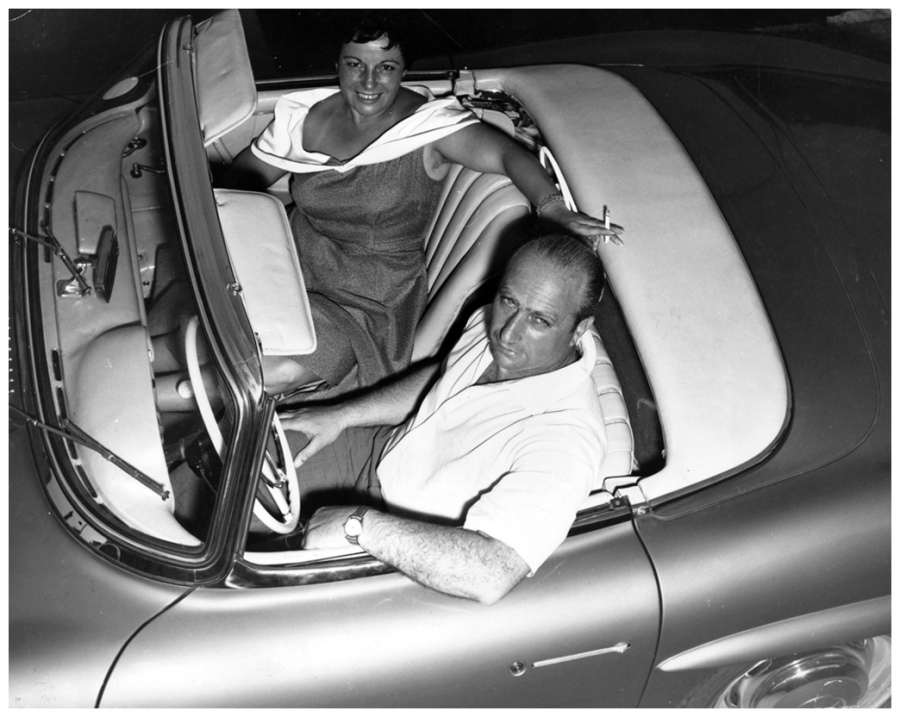
Juan Manuel Fangio, legendary champion, kidnap victim and a bit of a ladies man, cannot find peace in the great beyond.
The trouble comes from his relations with ladies and with children those relations produced: a judge in his native Argentina has ordered the exhumation of Fangio's body in order to perform a DNA paternity test.
That Fangio, who never married, had at least two sons has been know for years, at least in Argentina. The eldest is Oscar "Cacho" Espinosa, now 77 with a past as a race car driver as well. Espinosa is the son of "Beba"Berruet a married woman Fangio had a relationship with when he was 27 years old.
Espinosa's documents carry the Fangio name but how this came about is curious.
Espinosa was racing Formula 3 in Europe and his team was demanding the Fangio name for sponsorship reasons. Juan Manuel called in a favor from a colonel who was in charge of the local civil registry who changed Oscar's papers and added the famous name.
Fangio and Espinoza
But the champion never officially recognized Espinosa nor a younger son, Ruben Vasquez born four years after Espinoza to another married woman Fangio had an affair with.
The relationship between the champion and his son soured a couple of years before Fangio's death in 1995. Espinoza had asked him why he would not officially recognize him to which the old man replied, according to Espinoza's attorney, "You have to show me you deserve it"
The two men never spoke again.
Why would Espinoza embark on this quest so late in life? he told Clarin he's doing it in part as a tribute to one to his daughters who always told him he should not renounce his true identity.
Complicating this matter are the interests of the Foundation Fangio to which the master had donated all his artifacts and which has blocked the younger son's paternity quest n 2005.
Espinoza was able to present a strong enough case to convince the judge who ordered the exhumation to take place on August 7th and presumably will finally put this whole matter to rest.
In 1990 the FIA decided to change the Group C regulations from free engine displacement and type with a limited amount of fuel to a specific displacement but with unlimited fuel. The new engines would be 3.5 liter normally aspirated, essentially Formula 1 units.
With the advent of Group C, sport car racing had reached a peak of popularity by the end of the decade that rivaled Formula 1. Porsche, Mercedes, Ford, Toyota, Nissan, Mazda, Aston Martin, Lancia and Jaguar were all involved as were a healthy amount of privateer teams.
The new regulations effectively eliminated the privateers by making the older cars )mostly Porsche 962) uncompetitive and pricing them out of the series. By holding shorter races to compete with Formula 1, the series alienated fans of endurance, nobody really cared for two seater F1 cars.
Despite manufacturer involvement from Peugeot, Jaguar, Mazda, Nissan and Toyota, by '93 it was all over: Races had to be cancelled for lack of entries. Endurance racing globally was a giant mess that has only recently begun to make a real comeback.
Still, those 3.5 prototypes were amazing machines. The 1991 Jaguar XJR-14 was designed by Ross Brawn and built by TWR. It used the same Ford V8 engine the Benetton F1 car, albeit rebadged as Jaguar. Aluminum honeycomb and carbon fiber monocoque, pushrod suspension, carbon brakes and very advanced aero which gave it a huge edge over rivals, a couple of seconds a lap. Other teams eventually copied Jaguar's detached rear wing and ground effect chassis.
This XJR-14, originally raced by Derek Warkick and Martin Brundle, was driven at Monza recently by Belgian Christophe d'Assenbourg in the Coppa Intereuropa, part of the FIA Masters Historic racing series.
The 24 hour race was not the only event at the Circuit the la Sartre this past week end.
Hard to argue with a bunch of GT40s, Cobras, Jaguars, Alpine, Austin Healeys, Lotus even a Mercedes sedan, roaring down Mulsanne, sliding their way around the chicanes.
Unfortunately an Aston Martin DP214 spewed a truly epic among to oil, its driver seemingly going for the world record for speedy dry stripe lenght and the race ended under yellow.
The winner was the number 12 GT40 of Bernard Thuner and Claude Nahum. Full results HERE
This second clip had much better picture quality and Spanish commentary.
Fast forward to 10 min:30 secs for the race start.
The maiden F1 season for the Shadow DN1 was miserable. In 1973 the American team suffered twelve retirements in the thirteen races it participated in with two cars.
But man, did they look amazing!
The sinister black cars were well ahead of the competition in terms of aerodynamics and what they lacked in reliability they certainly made up in style.
Tomorrow you'll be able to tune into Fox Sports to follow the 2015 12 Hours of Sebring. You'll get live timing and scoring, updates on Twitter and Facebook, Before most of us were born, before there was an internet, before podcasting, before there was live TV for motor racing, fans would either read about races or perhaps be lucky enough to score one of these audio documentaries on vinyl from Riverside Records.
Riverside was a jazz label in the 50s but its founder, Bill Grauer was a racing fan who produced these incredible recordings.
Given how attention span has decreased over the years, you might find it hard to listen to the whole thing: the 1956 edition is an hour long, the 1957 an hour and a half. That would be a shame but, if it's just too much, at least browse them, there are some real gems here.
Moss and Z.A-D
The 1956 edition, for example, starts with a description of Stirling Moss:
"As a driver, Moss' style can described as erratic but terribly fast. He sits well back in the car, arms outstretched to the wheel. He's quite spectacular, honking his horn frequently at cars that do not pull over fast enough for him to pass, waving at spectators and flagmen. In easier races he is inclined to aim for photographers who get too close on corners, all in fun of course, and while they bare him no malice, they learned to honor his right to the road and take their pictures from behind the fences."
On the eve of the start of the 2015 edition let's look back about 30 years, to 1984.
Two wheel drive was still seen as a competitive technical solution in the early 80s but only in tarmac and gravel/tarmac .
1984 was the final nail in that coffin.
While boxy Audis looked awful as they plowed on dry tarmac, the Monte was almost all snow that year so anything with two driven wheels had no chance, Audi swept the podium led by Walter Röhrl.
The first clip is in Italian, it essentially tells of Lancia's (and everyone else's) tale of woe in the face of the teutonic turbos. Still the Lancia 037, the Renault 5 and the Nissan 240 RS the Open Manta (and was that a Subaru Leone?) all look glorious fighting their way around the icy hairpins.
No wonder everyone is so excited about the new R-GT championship this year,
The second, in English is a condensed version focusing mostly on the Audi and Lancias
Bonus clips in French and German at the bottom
"Fait attention au vaches!"... "aaargh" ... "C'est bon. C'est bon"
Short shorts, t-shirts and unfastened helmets mixed with much gallic arguing, it's hard to believe these two managed to get anywhere, much less win the Dakar outright. In fact Claude and Bernard Marreau were by then veterans of the first three editions of the desert classic and had a long previous experience in African Rally Raids.
A 1982 GoPro equivalent...
Cheers then for the brothers who 30 years ago, not only dodged african cows, managed not to strangle each other or kill their Safari edition 4WD Renault 20 Turbo but also made this film without the aid of a single GoPro!
The soundtrack gets pretty silly at times but stick with it and keep in mind that in the 80's turbos were a new and somewhat dodgy technology, ballsy by Renault to have the confidence their turbo engine would prove reliable in that hellish torture test.
The engine in the car was a carburated 1.6 L out of an R18 Turbo, good for 132 hp. 5 speed transmission, rear locking differential. Front suspension was double a arms, rear was a solid axle.
It has been restored, you can find that story HERE
Despite what you may read on Jalopnik , Jean-Pierre Beltoise's 1972 Monaco win was not BRM's only victory but it was the last for the British team.
Between 1951 and 1977, BRM managed to build only one championship winning car, in 1962, Mostly, British Racing Motors was know for its insistence on insanely complex 16 cylinder engines, in V and H configurations, both failures for different reasons. When they did win the championship, in '62, it was with a conventional V8 in a car instantly recognizable because if its odd, short, organ pipe exhausts.
By 1972, the Mclaren -BRM was not the class of the field but history tells that on Monaco streets underdogs can have their day and, on May 14, 1972, Beltoise won his only Formula One race, as Panis did in 1996 and Trulli in 2004.
Thanks to Alex King for saving this clip. Please note how in 1972 F1 was certainly not what it is today. How kerbs at Monaco were literally sidewalks, Christmas lights are used to illuminate the tunnel. Pay special attention to where people stood at the start on the climb to Massenet.
Great for pictures and, after all, what could possibly go wrong right?


 Numbers that attract the interest of Private Equity and this past week it was announced that controlling interest in J.D. Classics was acquired by Charme Capital Partners. Charme is an Italian based fund led by Matteo di Montezemolo.